2025 Travel Recap: Taking Life on the Road
A guide to living on a long-term trip
Last April, my wife and I set off on a 190-day trip through 14 countries: South Korea, Qatar, Turkey, Sweden, Estonia, Latvia, Poland, Belgium, the UK, the Czech Republic, Albania, the UAE, India and Vietnam.
What I wanted to figure out was the question on my mind: what is a better life?
In Taiwan, I’d already tried answering it again and again. From the city to the suburbs, from the mountains to the coast, I stayed in many places and saw many different ways of living. Lots of problems seemed to have some kind of fix: for the summer heat, the humidity, cold floors in winter, noisy surroundings, mosquitoes and cockroaches, and inconvenient transportation.
So many problems seemed eager to be solved. I’d find a clever fix and then marvel at how smart I was.
Live somewhere noisy? Block the sound with triple-pane airtight windows. So clever. Then add an energy recovery ventilator to bring fresh air inside. If the air is humid, run a dehumidifier and the AC. Want some sunlight? Save up for a high floor. If the floor is really high, remember to find a building with a few extra elevators so you don’t have to wait. A tall building with too many households gets complicated, so pick one with fewer, bigger units. It’s just a bit more expensive. A bit more expensive just means saving a bit more: a 20-, 30-, 40-year mortgage, paid off by the next generation. The building still doesn’t feel spacious, so get an even bigger place and knock two floors into one.
It seemed like every problem had a good fix, a better fix and a brilliant fix.
Layer after layer, one after another, the problems and desires all circled around a single need: how to live better. But solving problems takes time, and while circling these endless problems, the years go by one after another.
I didn’t want that.
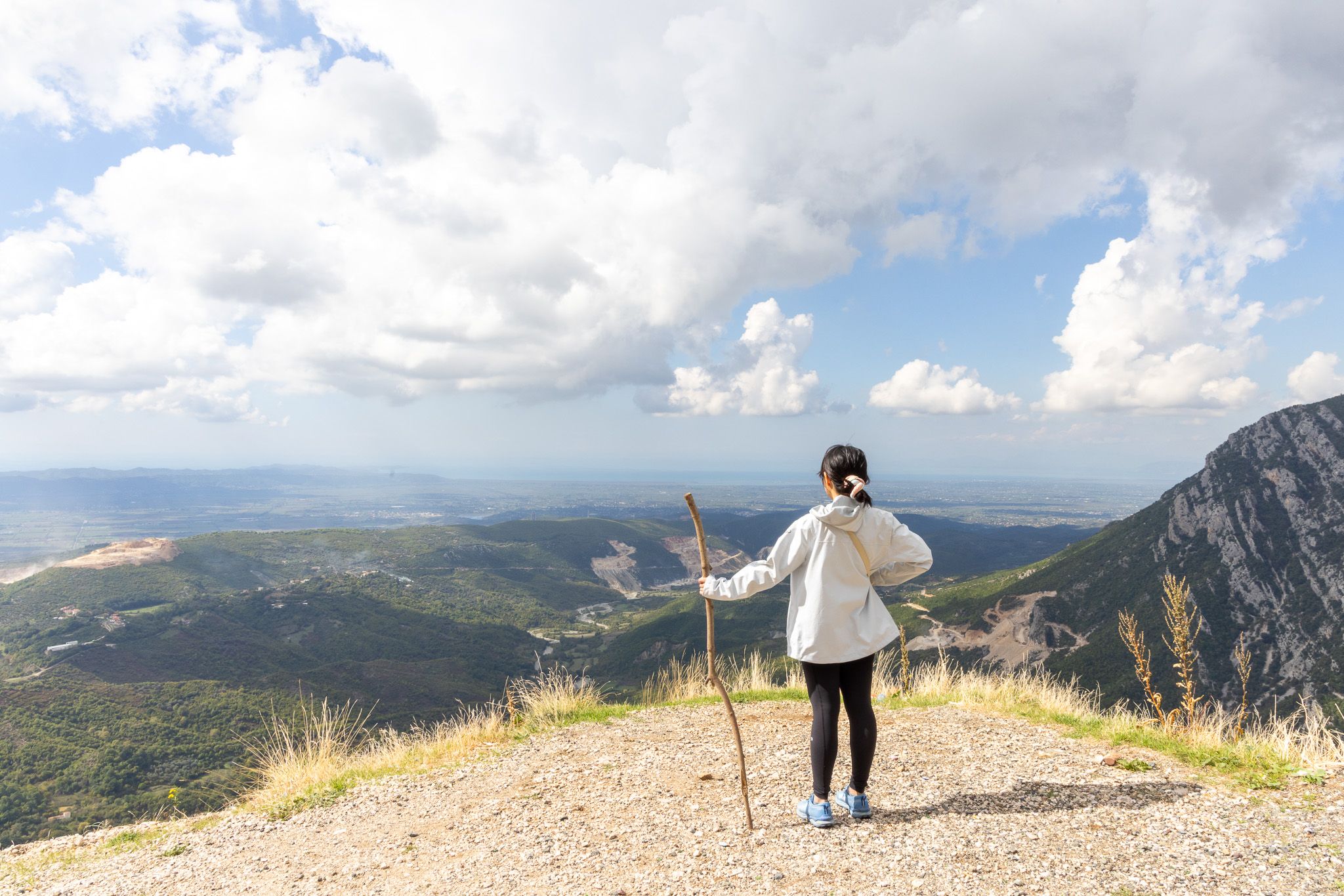
It’s like being a hiker in the mountains trying to climb higher. You reach a small hill, and the taller mountains in the distance are hidden behind clouds and mist. But you still want to go higher, so you build a tower right where you are, higher and higher, until you’re stuck in your own little tower and miss the mountains in the distance.
I felt I needed to go somewhere else and look for a better life!
Honestly, at first I wasn’t sure what I was looking for. Maybe nicer weather, maybe a quieter city, maybe a lower cost of living. The world is so big, and I wanted to see more of how other people do it. So rather than a trip, it was more of an experiment: taking apart the daily life I’d always taken for granted (eating, sleeping, exercising, grocery shopping) and putting it back together in different places.
This post isn’t a list of sights. It’s about how you can move your life onto a long-term trip that never stops changing, plus some of the modern healthy-living habits I keep picking up and adjusting.
Taking life on the road
Short trips are usually itinerary-first. You might pack in lots of sights and spend a lot of time getting between them, which easily squeezes your basic sleep and eating rhythm, not to mention exercise. On a long-term trip, though, the more important question is: if I stay here, can I still live well?
Can I eat enough, sleep well, exercise, work, learn, buy what I need, take care of my body, keep my own rhythm, and still feel like creating and exploring?
These needs sound ordinary, but ordinary needs are the foundation of life. Once a trip gets long enough, the sights become secondary and a city’s basics come to the surface. Is there a supermarket nearby? Can I cook at the place? Is laundry easy? Is the internet stable? Is it pleasant to walk around? Is there a park or riverside to run and relax? Is there a gym? Is it quiet at night?
If all of these check out, a place isn’t just somewhere to visit; it’s somewhere you can live for a while.
Backpacks
Backpacking keeps a lot of the urge to shop in check, since you can’t carry what you buy anyway. Back in Taiwan, it was easy to want to buy more: bring it home, pile it in the cabinets, and as it piled up, a lot of it never got used. On the road, we have to repack every time we change places, which is a chance to review what we’re carrying. What we want and what we stock up on just in case all turn into real weight, so naturally we want to lighten the load.
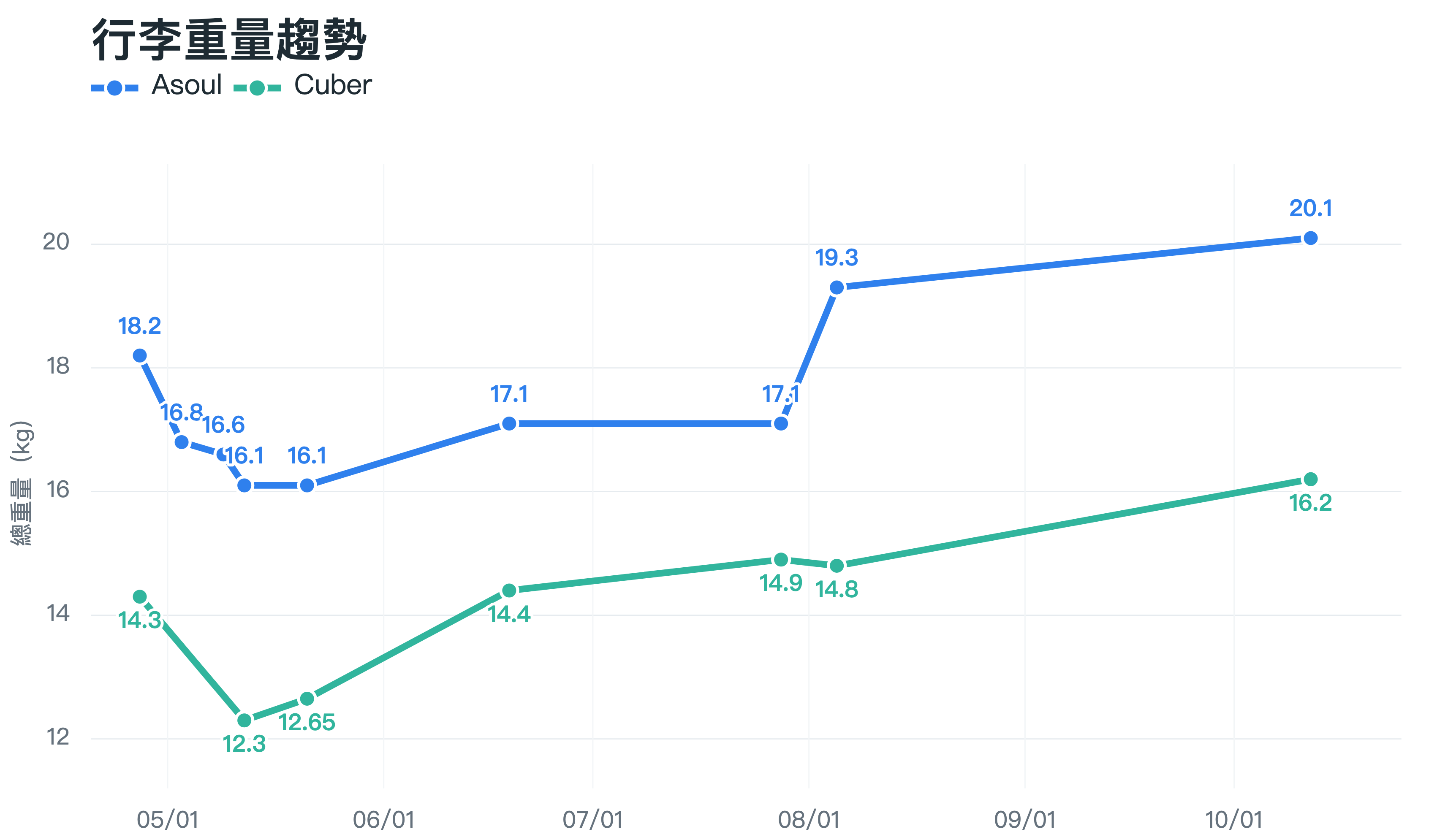
We each carry two backpacks, one on the back and one on the front, with all our luggage. The trip ran from April to November, so we packed clothes for three seasons and nothing specifically for winter. On average, the pack on my back weighs about 11kg and the one on my front about 7kg, around 18kg in total, usually somewhere between 16 and 20kg. My wife’s is usually between 12 and 17kg. Walking 30 to 50 minutes with our packs is still pretty easy, which I also credit to strength training.
Lodging
We usually look for an entire home with a kitchen, washing machine, Wi-Fi and air conditioning. These requirements look simple, but they decide whether you can really live somewhere. If you can cook, you don’t have to eat out every day; if you can do your own laundry, you don’t have to keep going to the laundromat.
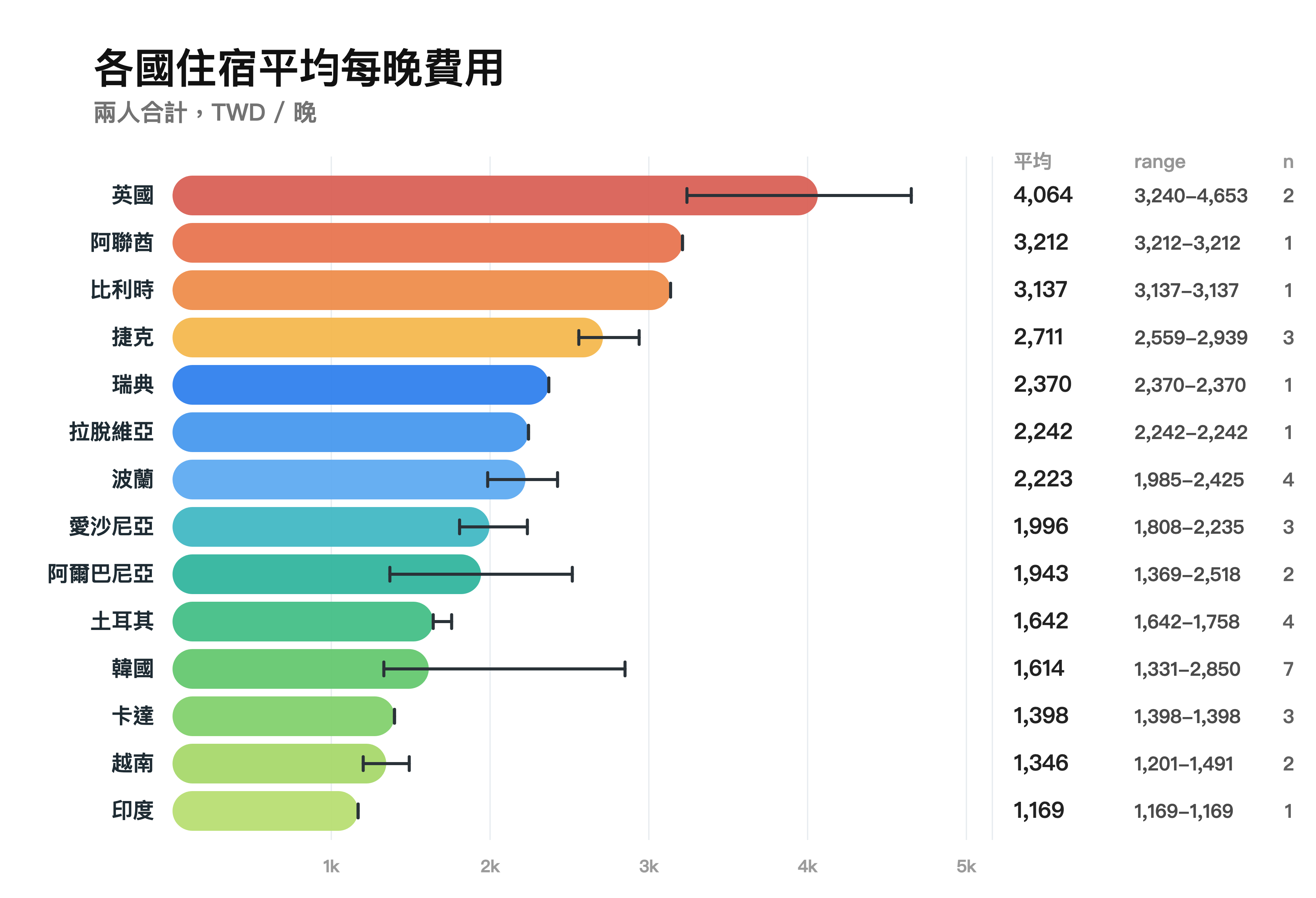
Lodging mostly ran around 2,000 TWD a night. Some cities were a bit more expensive, and plenty of countries were around 1,500 TWD.
We usually stay about seven days, or three or four at the shortest. Unless we’re catching a connecting flight or moving on somewhere, we don’t book very short stays. When a stay is too short, grocery shopping is a hassle and it’s hard to find time for laundry. We usually look for places with a supermarket and gym nearby. A park or green space is even better, residential areas beat tourist areas, and if reviews mention it’s quiet, that’s even better.
Parks and green space are another important indicator. Open the map: if a city has lots of parks, it’s easy for people to relax and wander around in them in their free time. If there are too few, some parks get crowded. If a city has a river, you can also check whether the riverbanks are wide and have paths built for running. In good weather, there are usually lots of people strolling along the river too.
Places with too many high-rises tend to have more people and cars on the streets. More people means more smokers, so there’s a lot of cigarette smoke. Narrow streets or poorly planned roads easily lead to congestion, and a poorly planned environment affects drivers too, making them prone to road rage, which makes it dangerous for pedestrians.
Every city has its own problems and character. In old towns with cobblestone streets, driving is bumpy, so cars slow down on their own.
Food: cooking, supermarkets and supplements
Cooking
We didn’t cook yet in South Korea or Qatar. We only started cooking in Turkey, which is also when we switched most of our stays to Airbnbs with kitchens. Once we got to Europe, we cooked even more often and ate out even less, because eating out was often expensive and not that good. My wife’s cooking also kept getting better around this time.
ChatGPT was getting really popular around then, and we used it for lots of cooking questions. In an unfamiliar supermarket, when we saw ingredients we didn’t know, we’d ask it how to cook them and what to pair them with. I used to think cooking was a fixed routine. Later I realized it isn’t about memorizing recipes; it’s about learning to turn unfamiliar ingredients into daily meals. The ingredients change from place to place, but a lot carries over: pan-frying, boiling, roasting, stewing, seasoning, the order of cooking, and the logic of pairing protein with vegetables.
Supermarkets and cost of living
We like browsing supermarkets to see what locals eat: what dairy and bread they have, what meat, what fruit and vegetables, whether there’s whey protein. We also check whether there are medium-to-large supermarkets. Some areas don’t really have big ones. Big supermarkets have a wide selection, and we like shopping there because we can stock up on lots of local ingredients at once.
I used to think living in Europe was expensive, but once we actually went to the supermarkets, I found that fruit and vegetables weren’t expensive after all. At Lidl in the UK, a can of sardines was under 30 TWD; in Swedish supermarkets, a bottle of Oatly oat milk was about 60-70 TWD; in Poland, fresh blueberries were 150 TWD a kilo, sold by the big basketful; and meat could be had for 100-150 TWD. A lot of it wasn’t as expensive as I’d imagined.
Every place has its own expensive and cheap ingredients, so comparing prices directly isn’t entirely fair, but it still works as a reference. These prices don’t necessarily represent a whole country, but they make you rethink what cost of living really means. Before the trip, I imagined Europe as expensive; once we were cooking and shopping at supermarkets ourselves, the picture became much more concrete.
Food is the foundation of life. In this age of abundance, it really isn’t expensive.
A map of food and flavors
We like slowly building connections between the foods of different places, along with the ability to appreciate them, and expanding our food comfort zone. For example, the first time we had kebab and ayran in Turkey, they felt new, but we weren’t really used to them. Later we found kebab shops in lots of places in Europe, and in the Balkans there were many dishes made in a similar way, served with ayran. Seeing how the whole food system connects was really interesting. It felt like we could see how food slowly evolved into different forms.
Or take coffee. In Taiwan I mostly drank lattes and black coffee. In Japan I’d drink a different style of black coffee. In many places in Europe, people love small espressos, and lattes with oat milk have become really common. The Arab world has spiced coffee, and Turkey has lots of coffee brewed with the grounds left in the cup. All kinds of coffee, each with its own flavor. Once I could appreciate all of them, the world seemed to get a lot wider.
Protein and supplements
We like having yogurt in the morning with creatine and blueberries. We eat about 150 to 250g of yogurt, which gives 15 to 25g of protein. I usually add a whey shake with 30g of protein. I weigh about 75kg and aim for 150g of protein a day. Two whey shakes with 30g of protein each, plus the 20g of protein in my morning yogurt, already cover more than half, and the remaining 70g spread across two meals is easy to hit.
In Taiwan, there aren’t many yogurts with more than 10g of protein per 100g. The common one is the Greek yogurt sold at Costco, and even ones with 7 or 8g are rare. Many countries usually have three or four or more high-protein options. Even in Kochi, India, where there were hardly any big supermarkets and the shops had only a few fridges, we could still find some Icelandic yogurt in small grocery stores.
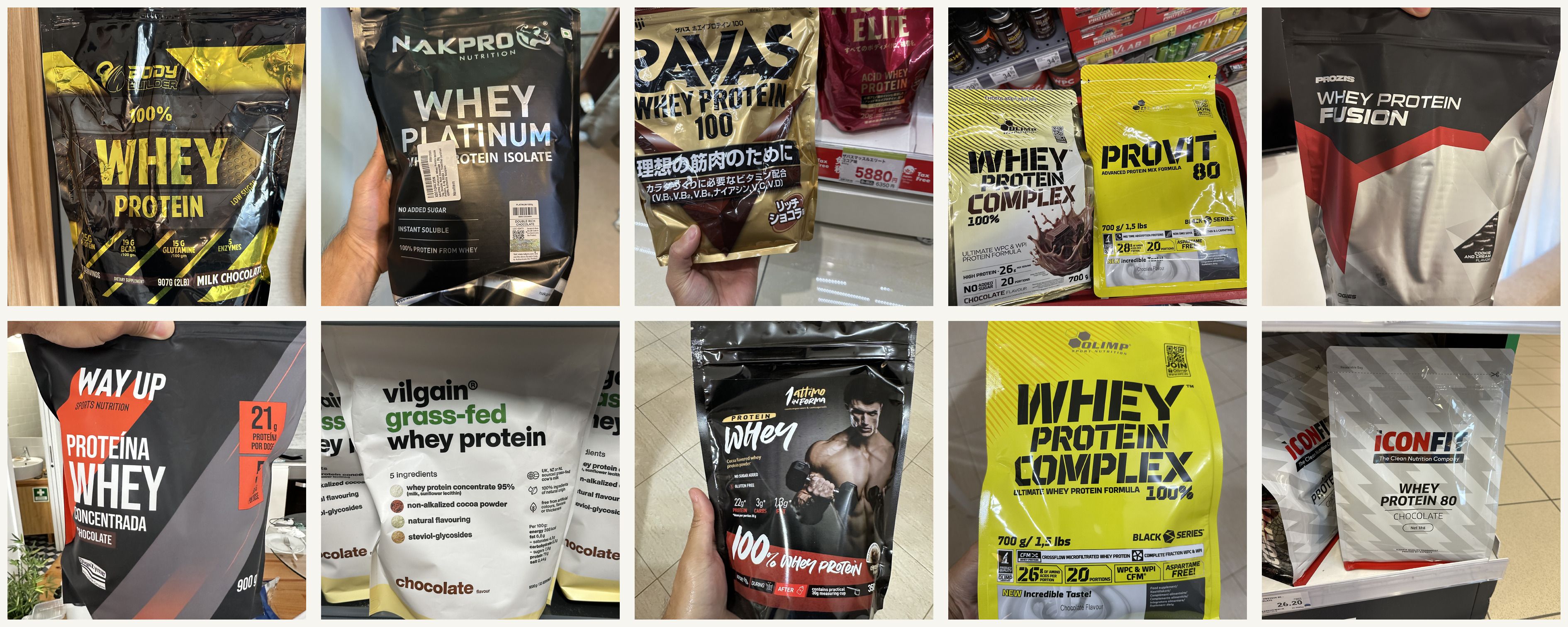
Whey protein is the supplement we buy most often. I usually buy a 1kg bag, which lasts about two weeks. Not buying huge bags also means less risk of getting stuck with a bad one. Chocolate is basically always pretty good, and when we get tired of it, we can switch to strawberry, banana, cookie or vanilla. But since we rotate through lots of brands, we don’t really get tired of it. Whey runs about 800 to 1000 TWD per kilo, and the price didn’t differ much across the countries we went to. In some countries you can buy it at the supermarket, in some you have to go to a sports nutrition store, in some a pharmacy, and in countries with Decathlon you can buy it there too.
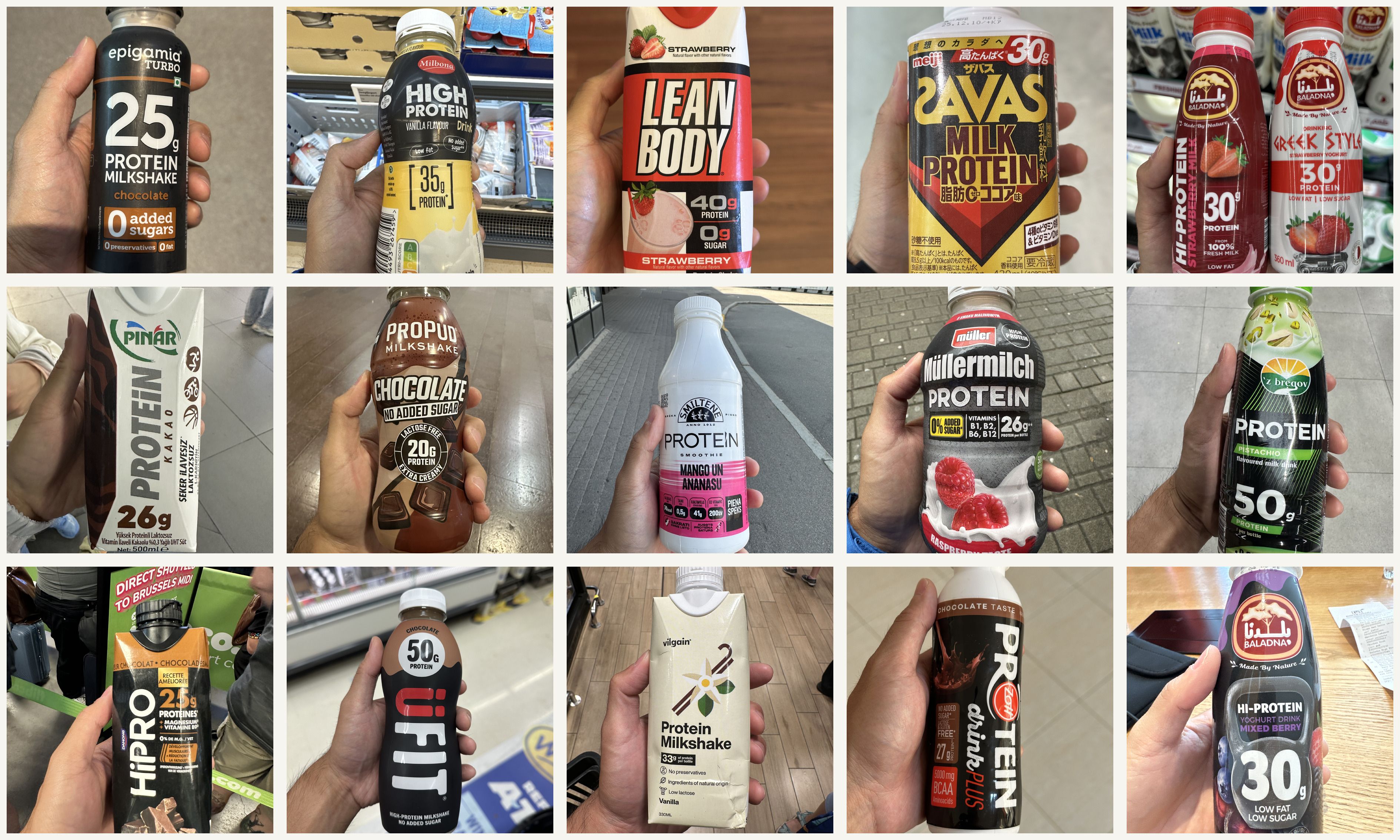
Sometimes we also have small bottled protein shakes, like on days we change lodgings; they’re pretty easy to find in many countries. There are also single-serve whey packets. We actually brought quite a lot of them at the start of the trip, but later found big bags convenient enough, so now we mostly buy big bags to cut down on trash.
We also take fish oil, D3K2, multivitamins and lutein as needed. Fish oil is fairly easy to buy pretty much everywhere, but some have very low EPA doses, or list EPA combined with DHA, so you have to choose carefully. When I’ve been using my eyes a lot, I also take some lutein.
We also order from Amazon to nearby pickup points. Amazon operates in many countries, and many of them also ship to neighboring countries. If you don’t want to spend time comparing products at local supermarkets and pharmacies, some items are much easier to buy on Amazon.
Shopping for all these supplements may look tedious, but on a long-term trip it actually matters a lot. Can you keep up the basics your body needs in different places: enough protein, fruit and vegetables, and supplements? Once these are steady, you can keep your body in really good shape while traveling.
Exercise
To keep a steady rhythm abroad, we follow a three-day cycle: strength training, running, rest.
That averages only 2.3 strength sessions and 2.3 runs a week, and many mainstream training plans say three or more times a week works better. But this rhythm gives us more free time to explore, and we’ve kept it up for a year with good results. It comes to about ten strength sessions and ten runs a month, which still gets pretty good results.
Over the 190-day trip, I did 64 strength sessions and 63 runs in total.
The barbell is a shared language
Strength training is hugely popular these days. We look at how many gyms a place has, how dense they are and how well they’re reviewed. It’s an important indicator when we decide whether a city is good for staying longer than a week.
Gyms show you a city’s young people, how international it is and its health culture. There have to be enough young or health-conscious people to support enough gyms. Whether a gym has enough reviews from foreigners, whether it cares about cleanliness and whether it offers day passes all show how friendly the area is to outsiders.
For strength training, we look for gyms with day passes or multi-day passes. Some lodgings also have their own gym; our places in Qatar and the UAE both had one, so we didn’t spend anything on gyms there.
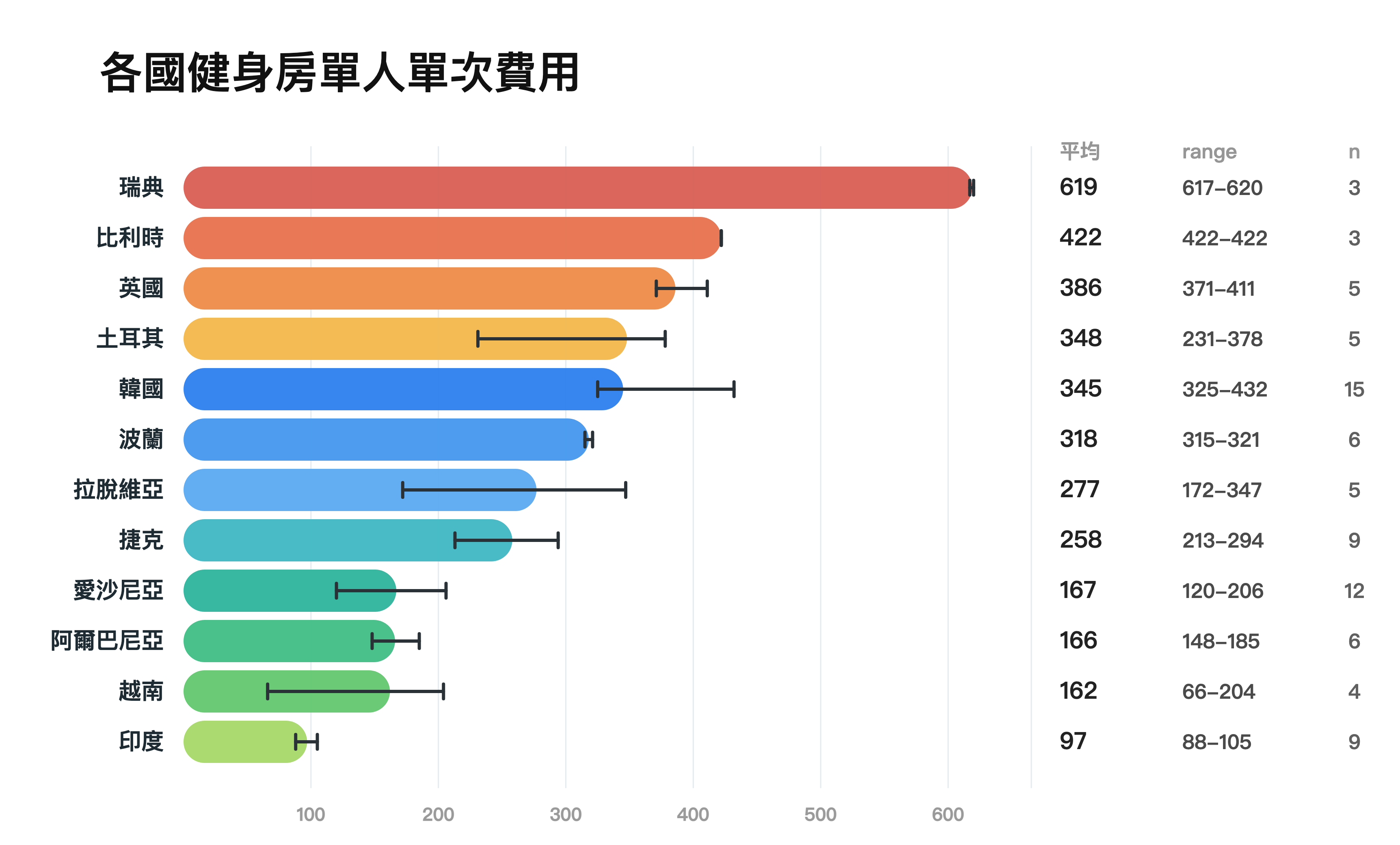
A single gym visit usually costs between 200 and 400 TWD, around 300 TWD on average. It’s usually good to look for gyms with lots of squat racks, since free weights tend to be more popular there, and with a squat rack and a bench you can train a lot of movements. In Sweden we also went to one that was almost 600 TWD a visit, one of the most expensive of the trip, but it had three big floors, a dozen or so barbell racks and a long sled track. There was plenty of distance between people, so it was pretty comfortable.
For my program, I rotate through legs, chest, back and shoulders. Each session has a 5 reps x 5 sets lift for that day’s body part, plus one accessory movement at 8-10 reps x 3 sets. Since three days is plenty of rest, I also do one movement at 8-10 reps x 3 sets for each of the other body parts, so about five or six movements in total, and each session takes about an hour. The movements are mainly basic multi-joint ones: lower-body push and pull, horizontal push and pull, and vertical push and pull.
Strength training builds muscle, more muscle means a higher basal metabolic rate, and walking with a loaded backpack gets easier too. For someone who doesn’t train, a 100kg squat could be life-or-death, a weight that would crush them. But if you train and keep raising your max strength, 100kg is just a warm-up weight.
I’m grateful to my body and my training for letting me get around country after country with 20kg of packs on me.
Running: when you get bored, change the scenery
For runs, I usually head for parks, green spaces or rivers, or explore old towns.
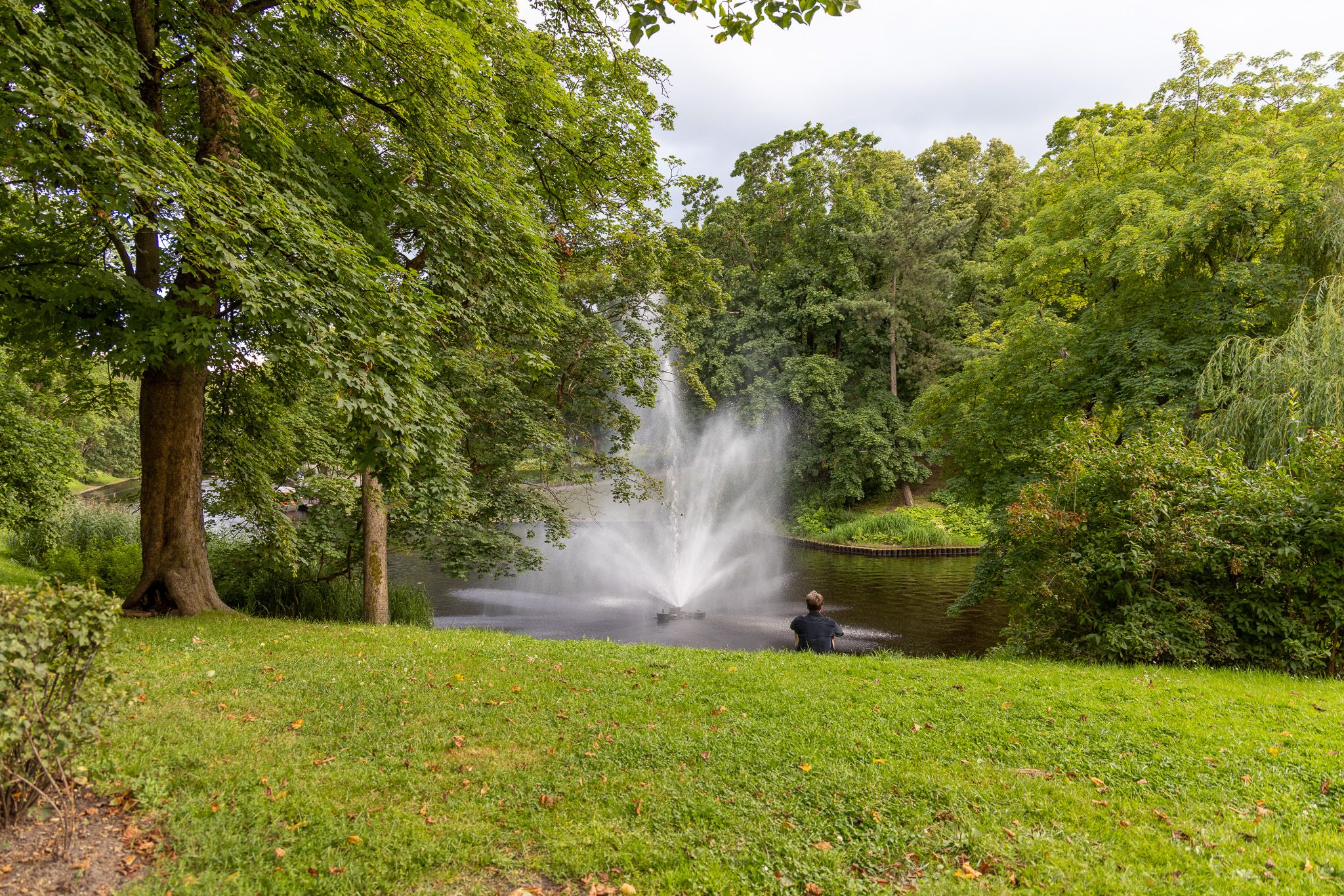
In Riga, Latvia, there’s a canal (Pilsētas kanāls) and green space right next to the Old Town, with lots of people relaxing on the grass. Running along the canal, then into the Old Town to look at the beautiful buildings, stopping now and then for a photo before running on to the next sight, was a lot of fun. In Suwon, South Korea, we ran along the walls of Hwaseong Fortress. In Istanbul we ran along the Bosporus, watching lots of seagulls eating sunflower seeds.
It’s the same running, but in each place you see different scenery and explore a bigger area.
After this trip, we also traveled in Japan at the end of the year. We’d pick some shrines on the map and turn it into a goshuin pilgrimage: run one to three kilometers, get a goshuin stamp, head to the next shrine, and finally end at a public bath. A real treat.
Of my ten runs a month, most are easy zone 2 runs of about 30 to 60 minutes. Once or twice a month I add an LSD (long slow distance) run of around 70 to 90 minutes, and once or twice a VO2 Max workout to build cardiovascular fitness.
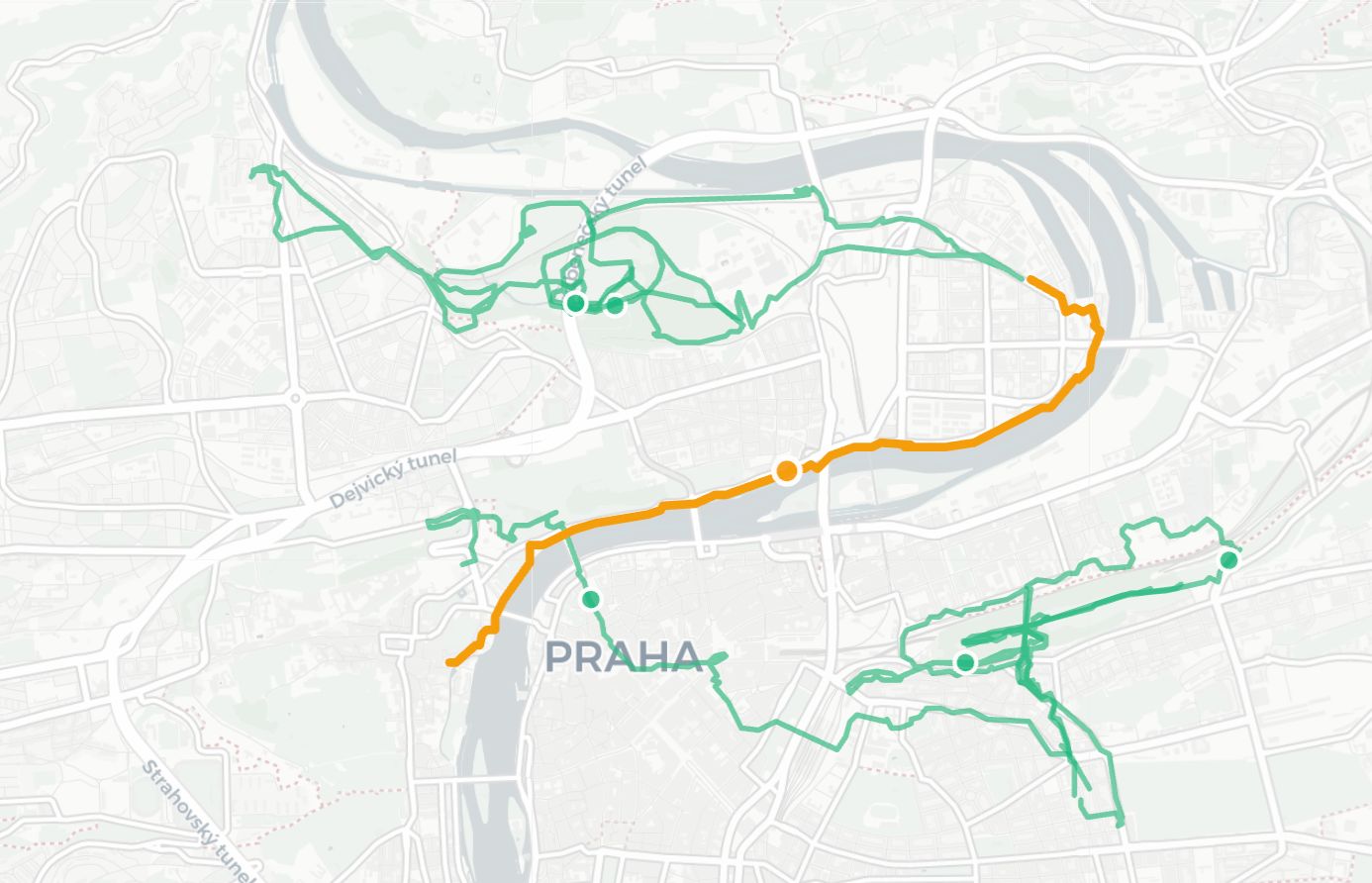
Exploring a city one run at a time: in Prague, Czech Republic, I ran seven times to explore different parts of the city.
Sometimes I run with my camera too. At first I thought it would be really inconvenient, but it turned out that at an easy zone 2 pace, it’s not that bad. With a camera, I can aim for a farther spot, run there, grab a meal, look around, and then take transit back.
Getting around
Walking
Abroad, we averaged 13,400 steps a day. Belgium had the highest average at 19,866 steps a day. Qatar, where we rented a car, and India, where we often took tuk-tuks, were lower, around 8,000 to 9,000 steps a day. In Taiwan I often had to make time for exercise on purpose; abroad, grocery shopping, getting around and exploring usually racked up the steps on their own.
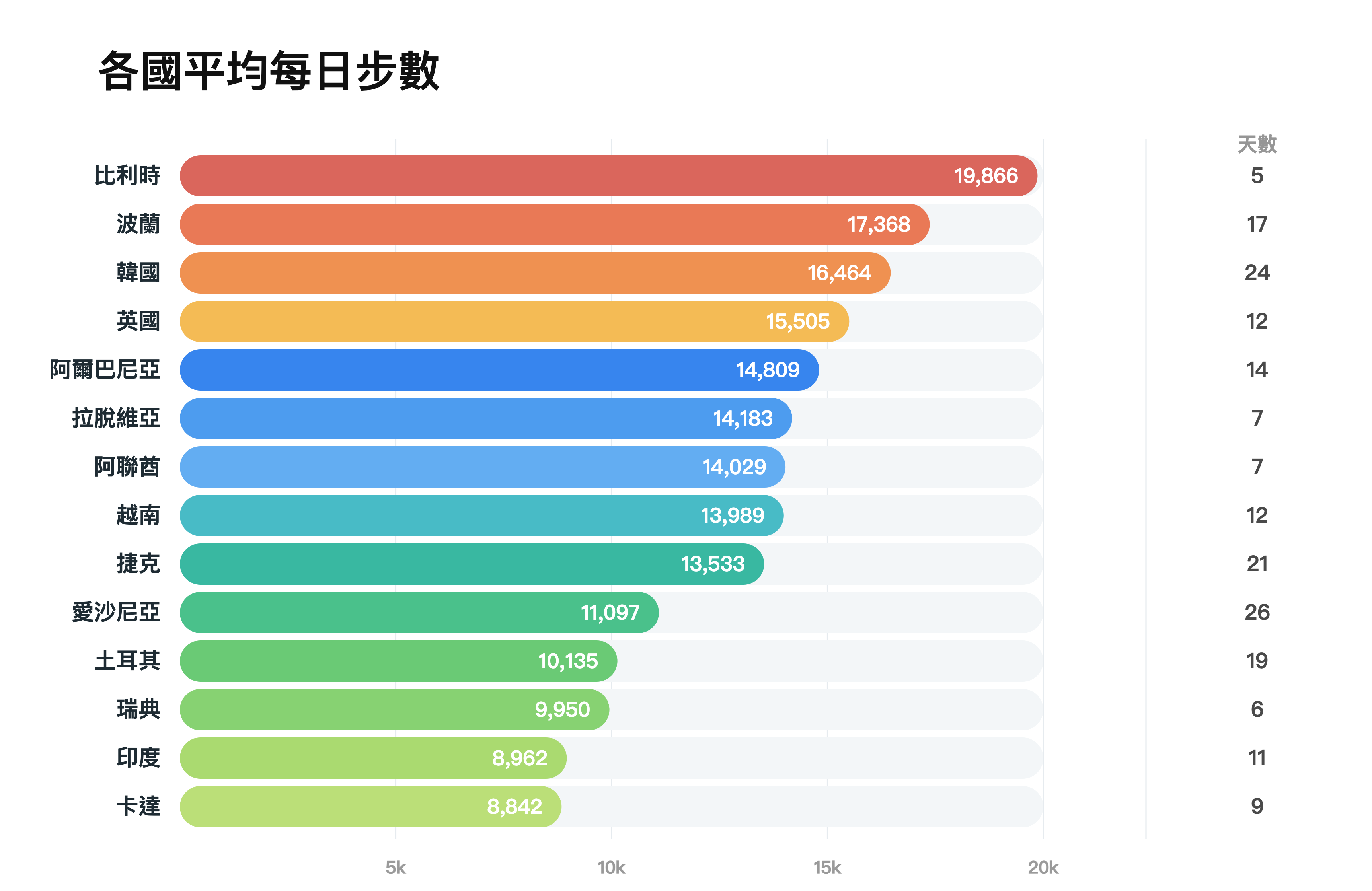
We usually don’t plan trips too far away; exploring the area around where we’re staying comes first. If a city is big, we stay in a few different areas so we can explore different parts of it.
Between cities
When planning, we use Google Flights Explore to find where to go next, usually looking for short direct flights.
We took 13 flights in total and spent about 58,000 TWD per person on tickets, all one-way, about 4,500 TWD per flight on average. We almost always flew without connections, often on short 2-3 hour direct flights.
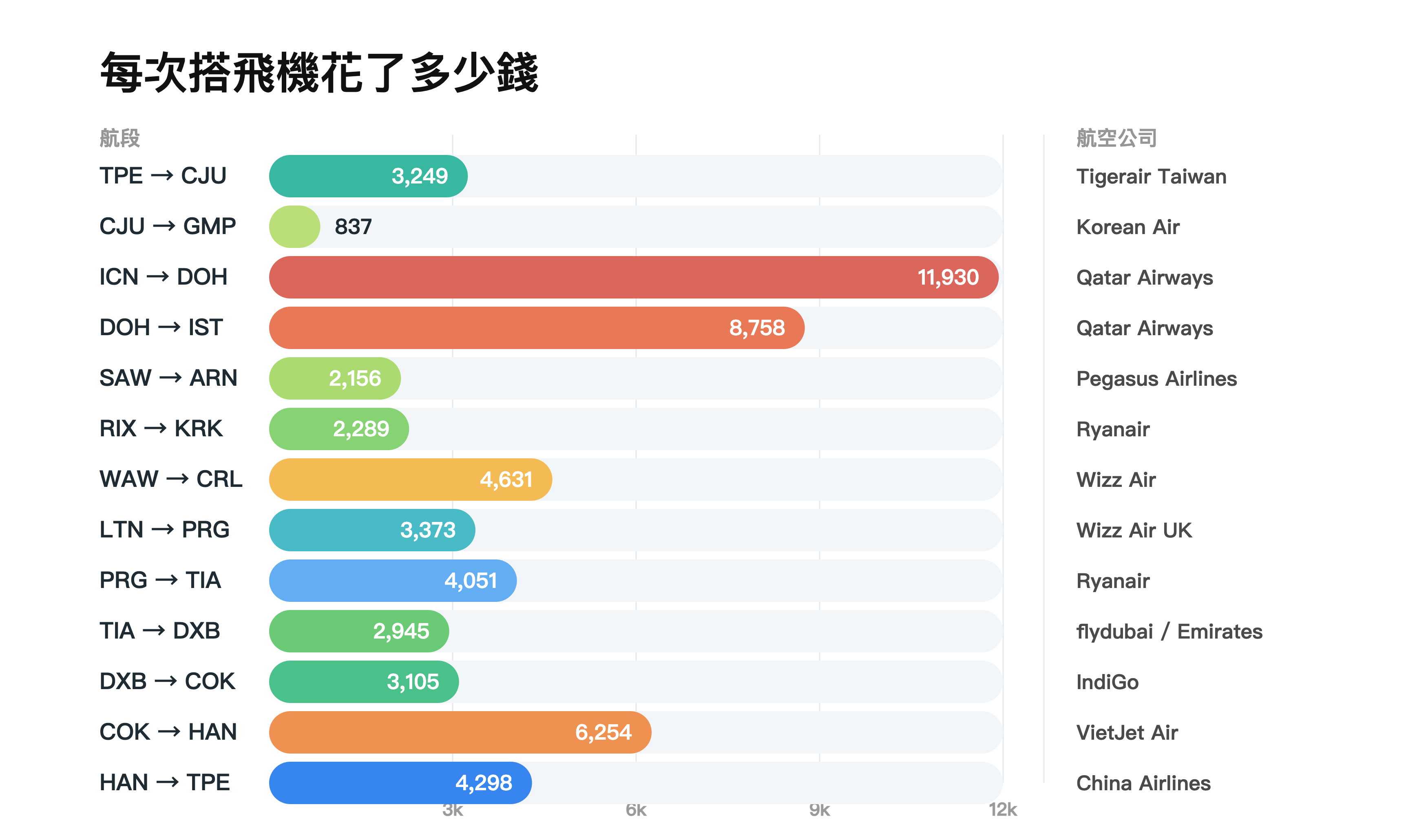
We usually fly budget airlines, and sometimes full-service ones, mainly depending on where flights from the airport go. We try to pick times that aren’t too early or too late, and if the time works, we check the airline’s reviews on Skytrax. Most of them really aren’t bad. I remember seeing people say their body feels awful if they don’t fly business class, but I found plenty of economy seats pretty comfortable. The seats weren’t too small and I slept well, maybe because I take good care of my body day to day.
Internet
For long-term travel today, internet access is infrastructure. Especially now that we use Google Translate and ask AI questions, losing connection is a real hassle.
For internet, we use Fonus’s 29.99 USD a month plan. It has 20GB, covers data in over 100 countries, and includes free calls and texts in many countries, so it’s really convenient when traveling across borders. We compared lots of eSIM plans, and this is the best one we’ve found so far. (It worked so well that after the trip, we switched our Taiwanese phone numbers back to prepaid.)
As a side note, at one point we switched to the Fonus Max 59.99 USD plan, which the official site advertises as unlimited data. I used it to play Baldur’s Gate 3 on NVIDIA GeForce NOW, and after a few days my connection was suddenly throttled. Customer support told me that using that much data apparently still violates the terms of use or something, so we switched back to the original plan.
Speaking of games, in Estonia I hadn’t played video games in so long that I bought a PS4 controller. It connects to my MacBook and is small enough to tuck into my backpack, so it’s pretty handy for the occasional game. Later, when Hollow Knight: Silksong came out, I played it a lot too. If I’m taking my life on the road, of course games come along.
Habits: without a fixed place, you need a fixed rhythm even more
Besides the three-day exercise cycle, I also have a seven-day cycle of learning and creative habits. Each day has one goal: Monday is making games, Tuesday is listening to podcasts, Wednesday is practicing spoken English, Thursday is reading, Friday is studying games, Saturday is editing photos, and so on.
At first it was only learning on Tuesdays and Thursdays. Once those became habits, I slowly added more until it looked like it does now. When I occasionally skip one because of a flight or being busy, I make it up within a few days. Quietly, each one adds up to at least 50 times a year, and it’s pretty satisfying to see myself quietly keeping some habits going.
I think long-term travel takes a lot of initiative. You need your own time management and discipline. Your circadian rhythm for sleep, your exercise cycle and building habits all matter a lot. Because you’re often in an environment you’re disconnected from, and there’s a time difference with your communities back in Taiwan, your schedule can drift anywhere. So keeping it on track and in balance becomes really important.
Every Tuesday I listen to the Huberman Lab podcast to pick up some science. A lot of it is about physical and mental health, often covering topics like exercise, supplements and sleep. Taking in or reviewing some knowledge every week lets me learn and re-examine my own routines.
Travel looks free, but without rhythm, the days blur together. Being able to do anything can end with doing nothing. For me, these fixed rhythms let me slowly move in a few directions.
Bonus: handy travel gadgets
Voltrx electric protein shaker: it quickly mixes whey powder into water, the base charges over USB-C, and one charge lasts several weeks. I used it almost every day on the trip. After drinking, I wash it, fill it with water and put it in the fridge, so the next time I have an ice-cold whey shake.
Theragun mini 2.0 massage gun: it’s only 400g but massages plenty deep. I use it every night before bed, and it also charges over USB-C.
PHILIPS MG5930 all-in-one trimmer: I bought it in Turkey. It trims nose hair and beard, has swappable heads for different lengths, and also charges over USB-C. Very handy.
Vitcoco wireless ear camera: I bought it on Amazon while in Estonia. I hadn’t cleaned my ears in way too long, so I bought one that lets me see inside my ear canal while I clean it myself. Not digging blind is much more reassuring, and it also charges over USB-C.
A lot of our electronics charge over USB-C, so we don’t need to carry many cables and can pack lighter.
Costs: how much did two people spend traveling for 190 days?
Looking back at our spending, the two of us spent about 1,018,000 TWD in total over 190 days, an average of 5,360 TWD a day. Lodging was about 402,000, or 2,117 TWD a day; food was about 286,000, or 1,505 TWD a day; and intercity transportation (flights, cruises, trains, long-distance buses) was about 125,000, or 657 TWD a day.
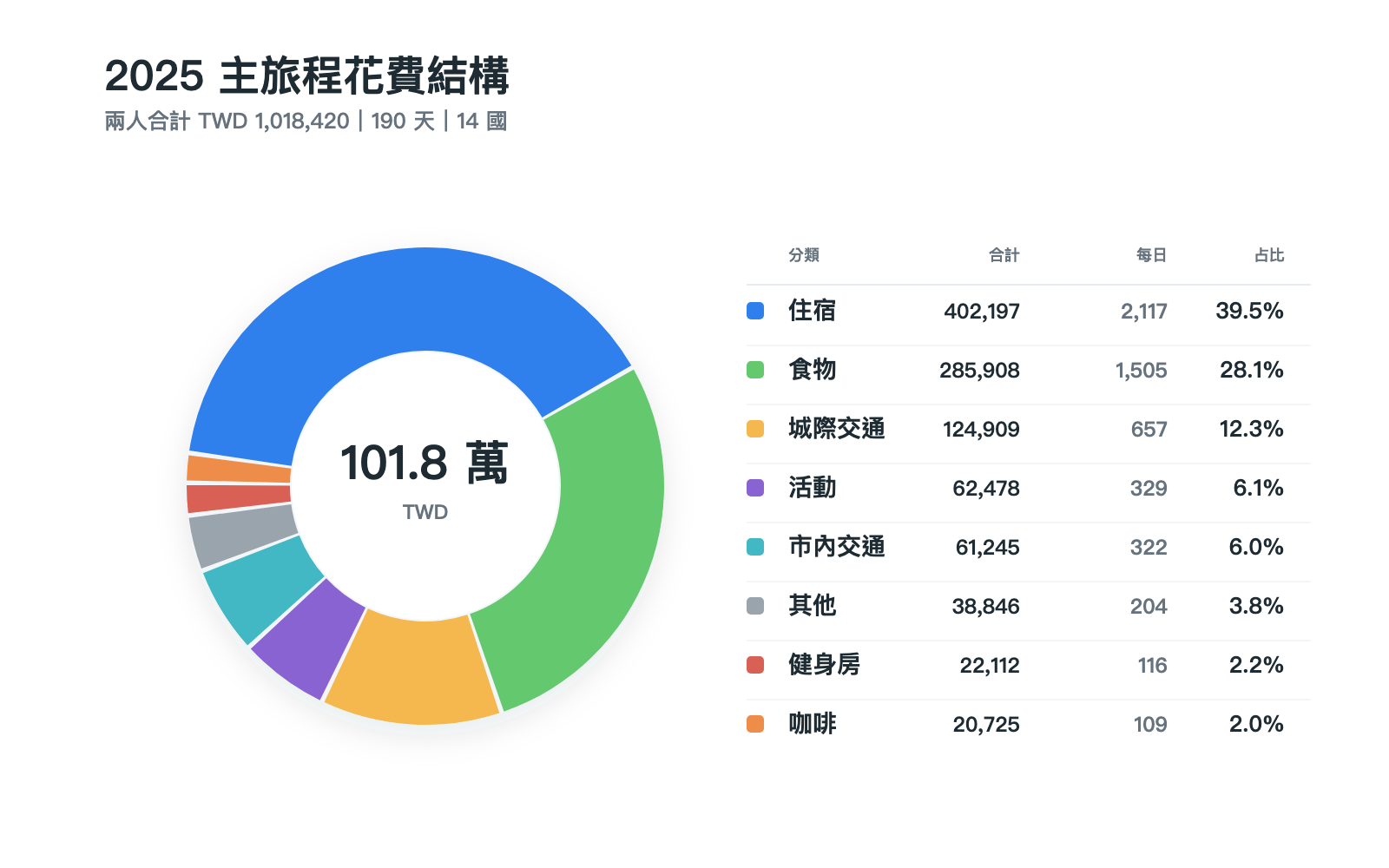
Before traveling long-term, I only had a vague idea of the costs. It seemed like it would take a lot of money. But once we actually tracked it, we could see where the money went and found it really wasn’t that much. With longer stays and transportation costs spread out over them, it could be even lower. Food and entertainment don’t cost much more than in Taiwan; the main differences are lodging and travel costs. We weren’t going to expensive attractions or eating expensive meals every day either. Most of the time, we were just living.
Distance: the quiet of not understanding the language around you
I like being somewhere my wife and I are the only ones who speak Chinese.
There don’t need to be many people around. We can’t understand what they’re saying, and they can’t understand us. We really enjoy that private sense of distance. In small towns with few tourists, there are almost no Asian faces. We eat our food, do our own thing, and keep a respectful distance from the world, with nothing outside to worry about.
For example, I like the sense of distance in Estonia. Estonia is about the same size as Taiwan, but has far fewer people (its population density is only about 1/20 of Taiwan’s). In the capital, Tallinn, the roads are wide, there’s lots of green space, and there’s plenty of distance between people.
Back in Taiwan, being able to understand everything people around me say feels familiar, but it’s also too much.
It’s the curse of knowledge.
I don’t really want to hear what the people next to me are saying, but my brain understands it and analyzes it automatically, quietly stuffing lots of information into my head. Most of what people around me say has nothing to do with me; it’s just noise to me. I could tune it out with headphones, but I’d rather have that sense of distance. Of course, it’s even better when it’s quiet.
The end of one journey, the start of another
This year we’ve started another big year-long adventure, and I realized I never properly looked back on the last one, so I decided to write this post to record it.
Back to that original question: what is a better life?
After being on the road for a while, I slowly realized that what I was looking for might not be a perfect place, but the ability to live on the move: expanding my comfort zone so I can be more comfortable wherever I go.
When it comes down to it, life is just eating, sleeping and living. Maybe you don’t have to stay in one place and optimize every problem to the limit. Some problems disappear when you change places. Some desires are naturally met in a different environment. And some of what used to feel hard becomes part of daily life on the road.
Much of what’s rare or plentiful depends on where you are. In Taiwan it’s hard to see snow in winter, but in countries at higher latitudes it’s easy. Don’t look for quiet in a noisy place, and don’t look for seafood in the mountains. The world is big, so don’t look in the wrong place.
Life is actually pretty simple. To live healthily, you probably need to keep learning about nutrition, exercise and health, learning how your body works, and learning from the latest scientific studies. Learning how to sleep, how to get sunlight, how to breathe, how to be mindful: step by step, it all helps your body work better.
For me, the long-term travel mindset is the courage to face the unknown; the ability to keep learning and to keep finding new, stimulating environments; the ability to keep getting enough protein and exercise to stay healthy even in an unfamiliar country; a state that’s both flexible and motivated. Once you expand your comfort zone, what used to be hard becomes easy. It’s like strength training: once your max strength goes up, your old 1RM becomes your 10RM, and then your 30 RM.
When we first set out, we hadn’t decided on a direction very far ahead, so we felt a bit lost. The road ahead was so uncertain: we didn’t know where we’d be or where we’d go next.
But that’s the price of freedom.
Life is full of uncertainty to begin with. Nobody knows which will come first, tomorrow or an accident. Locking yourself into rigid decisions to keep anything bad from happening is just covering your eyes so you don’t have to look. Accept uncertainty, and build up your abilities so you can be more flexible.
After a year of visiting many countries, I found the world is huge, with places to explore everywhere. There are hundreds of big cities in the world and tens of thousands of small towns. If you stayed at least a week in each, that would take hundreds of years. And a few decades from now, every place will have changed a lot, with more to explore, not to mention the cities worth going back to again and again.
I once read a book called Die with Zero. The author hopes to spend all of the money before dying, and argues that memories from your younger years compound over time and fill your life with good memories. I really agree with that view.
Living like this was a goal I set in 2018. Along the way I kept adjusting the rhythm of my life and work, got through the pandemic, and finally made it happen in 2025.
Thank you, past me.
Postscript: After returning to Taiwan in November 2025, we set off on a long-term trip in Japan less than a month later. I have plenty of takeaways from Japan too, enough for another post later. And in March 2026, we started this year’s long-term trip.
The post ends here; the journey continues.